
 April 1, 2026
 Ian Cass
Standing on the banks of the magnificent Loch Ness (Loch is the Scottish word for Lake), you can’t help but wonder what lurks beneath.
For over a millennium, stories of a monster have woven themselves into our collective consciousness. From mythology and folklore to grainy photographs and scientific fascination, the Loch Ness Monster, or ‘Nessie’ as she’s affectionally known, attracts visitors from every corner of the world, contributing a massive £41 million to the Scottish economy every year.
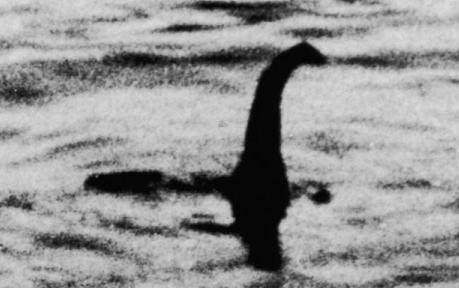
Thanks to Queen Victoria and the novels of Sir Walter Scott, the Scottish Highlands became the go-to travel destination, and by 1900 sightings of Nessie had surged. But it was in 1934 that perhaps the most famous image of the monster was published, taking the legend to a global audience. Alas in 1994, the photograph was discredited as part of an elaborate hoax.
This did little to detract from the mystery of the loch. The official register (yes, there is such a thing) records nearly 1200 sightings with descriptions ranging from dragons to prehistoric plesiosaur’s, giant eels, to huge animals, serpent-like creatures and a “great beast resembling a whale.”
Science has been unable to prove (or disprove) the existence of a monster, and much about the Loch remains tantalizingly unexplained. Even around 25% of environmental DNA analyzed within the last decade couldn’t be identified. Inconclusive sonar echoes only add to the mystery.
The scale of scientific survey, however, has allowed us to build an understanding of the impressive biodiversity of the loch. The loch is host to migratory fish such as the critically endangered Atlantic Salmon, freshwater pearl mussels, otters, seals, and even dolphins. More unexpected visitors such as sturgeon, catfish and giant eels also make Loch Ness their home, as do a spectacular array of invertebrates, amphibians, and birdlife.
At Hitachi Global Air Power, we love a mystery, and a challenge (remember the haggis), so we dusted off the binoculars and took to the banks of Loch Ness. You’re probably wondering what a mythical Scottish water monster has do with compressed air, bear with us, and all will become clear.
Watch and find out:
Looking into the deep, dark waters of the largest body of freshwater in the UK (it holds more water than all the lakes of England and Wales combined), even the most skeptical among us (Marie?!), feel a connection to the legend and what it inspires.
Our way of life is intrinsically linked with our marine and aquatic environments. Energy production from oil rigs to offshore wind, global shipping and the wider blue economy all impact the biodiversity of these precious ecosystems.
Compressed air is being used to successfully mitigate risk to marine life while creating efficiencies for business through some exciting, innovative and surprising use cases. Working with our partners and original equipment manufacturers (OEM), our compressed air solutions are playing their part in:
The deployment of bubble curtains, with a constant stream of bubbles generated by high quality, oil free compressed air, geofence marine construction sites, reducing noise by up to 90%. This redirects wildlife to safe migratory routes and reduces noise related stress and disorientation.
Bubble curtains have also been successfully used to tackle the challenges to power production caused by jellyfish blooms. Increased jellyfish numbers are attributed to rising water temperatures and have blocked the inflow of water used for vital cooling for nuclear power generation. By using a bubble curtain, the jellyfish have been redirected by a gentle nudge, reducing costly, and potentially dangerous downtime.
Similarly, by deploying by bubble curtains at the mouth to a port or marina, the risk of ice damage to vessels and icebound downtime is being reduced.
Bubble curtains can effectively corral plastic pollution surface debris for easier collection. Curtains can also be positioned to lift submerged plastic. In freshwater environments, this can aid fish migration and increase dissolved oxygen content in the water.
Biofouling is the build-up of aquatic microorganisms, plants, algae, and small animals on vessels and offshore structures that can significantly impact performance and asset integrity. Cleaning is usually undertaken manually by divers; however, compressed air can be used to disturb biofilm with bubble curtains deployed to limit regrowth; discouraging and gently redirecting these organisms.
Unlike the Nessie question, there is no ambiguity about the need to protect our aquatic ecosystems. It is an undisputed fact.
At Hitachi Global Air Power, we are committed to working with our partners and customers to deliver innovative compressed air solutions to tackle the growing challenges impacting our world.
Whether you’re a Nessie believer or not, protecting our marine and freshwater environments is a story worth believing in.
We believe.
If you’re interested in learning more about how our compressed air solutions can enable your organization to operate efficiently, effectively, and deliver on your environmental and regulatory responsibilities, get in touch today.
Use the checkboxes to select the types of cookies you want to accept, then press the “Save Settings” button. View our Privacy Policy.